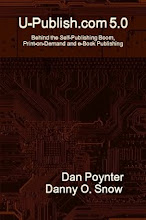
For short, frequent updates about today's self-publishing boom, visit our new Facebook community page! Long into your FB account, then click the link below:
http://www.facebook.com/pages/The-Self-Publishing-Boom/161347753878066
It includes breaking news, tips and tricks for the streetwise self-publisher, and success stories of interest to anyone who self-publishes a book.
To get the full bi-monthly e-mail newsletter free of charge, just follow the link below to subscribe:
http://www.u-publish.com/enroll.htm
Friday, April 1, 2011

Sunday, July 4, 2010
The Savvy Self-Publisher, July-August 2010
Happy Independence Day! Ben Franklin and Thomas Paine were independent publishers just like us. Join us in sharing the pride we feel from sustaining this characteristically American tradition!
===> Tip of the Month: <===
Martin Shepard of Permanent Press writes:
"There is a time and place for everything, and it's high time to turn the spotlight on book reviewers in this age of shrinking review space. Instead of alerting readers to significant ideas in new works of fiction and non-fiction, reviews are increasingly about popular culture and celebrity authors. It's time that critics face criticism themselves.
"To this end we've created The Donkey Award (Equus Asinus). An engraved plaque will be awarded for the Best Abuse Of Space For The Least Deserving Book; in short for the most asinine review of the year.
"The award ceremony will feature various asinine reviews, which will be distributed to the press to illustrate our point, along with statements from the judges, most of whom will be in attendance. A donkey will also be present, if he is not too embarrassed to attend." More:
http://www.thecockeyedpessimist.com
===> Quickie <===
We want to coin a new term: DIYP. Not just "self-publishing"but "Do-it-yourSELF-Publishing." It is intended to describe the process of those who use services like Blurb, CafePress, CreateSpace, Lulu, Wordclay, etc. where authors prepare books for publication themselves, rather than paying substantial fees to vanity presses.
DIYP does not replace the term "self-publishing" but adds a distinction between a) conventional self-publishing, where the author works with an editor, book designer, printer, etc.; versus b) DIYP; versus c) vanity or subsidy publishing.
===> Lead Story: e-Book Boom Continues <===
If you missed BEA and IBPA's Publishing University in June, shame on you. But you can watch a lively broadcast of experts discussing e-Books:
http://beyondthebookcast.com/live-webcast/
The trendy new iPad has now sold more than 3 million units. The Kindle has more than 5 million users. Barnes and Noble and Borders have both launched their own devices for e-reading...
But don't overlook smartphones. The iPhone and iPod alone boast more than 50 million users already, and could reach 100 million in 2011. The Google Droid, Palm Pre, Sprint Evo and others will add millions more.
Reading on handheld devices is growing rapidly. Estimates vary, but some observers believe that book related apps are the #2 leader at Apple's wildly popular App Store.
Stay tuned to this newsletter for updates!
===> Help Spread the Word? <===
Please feel free to forward copies of this newsletter to your fellow authors and publishers. This is a fre* resource that is available to anyone in the book world upon request. We don't accept paid advertising, endorse or guarantee products or services, nor accept fees for mentioning them without full disclosure. To subscribe:
http://www.u-publish.com/enroll.htm
===> Donate Books for Children <===
The Madera County Child Abuse Prevention Council (MCCAPC) in California wants donated books for children. MCCAPC is a non-profit agency (ID # 82-0576184).
For the 14th year, MCCAPC will be hosting an annual community event. A popular activity is 'Story Time' where volunteers read stories to the children. This year they want to offer a free book to each child who participates in Story Time. Hopefully, receiving a book to take home will encourage the joys of reading. If you have spare books for children, please consider donating them.
-Barbara Bailey, Event Chair: barbarab@inreach.com
===> Quotation of the Month for Self-Publishers <===
"Without promotion, something terrible happens ... NOTHING!"
-P.T. Barnum
===> The Write Stuff <===
The word "misled" is sometimes mis-pronounced "myzelled" rather than "miss-led" but the latter is correct.
This is a regular feature of this newsletter, intended to help subscribers polish their writing. Got a pet peeve? Share it by e-mailing newsdesk@u-publish.com with suggestions.
===> News You Can Use <===
Concise and easy to use, "The Best Little Grammar Book Ever!" has the answers to the most common problems and grammar issues that stump and confuse us -- about 125 pages. For more information:
http://www.bigwords101.com
===> Reminder: Another Dog Rescue <===
Each month we post a dog adoption item from fellow self-publisher Jen Pavlovic, author of "8 State Hurricane Kate" and a brand new book titled "Not Without My Dog." Below is a new one:
Australian Cattle Dog Rescue of Illinois has some really NEAT dogs available for adoption! Some have herding ability, some play ball, and/or Frisbee (disc). Some have the drive needed for agility, rally, search and rescue, and more.
Come take a look! You'll surely take one home! http://www.australiancattledogrescue.net
Please consider forwarding this to fellow animal lovers. We're hoping that the self-publishing community will pitch in to help Jenny continue her efforts to find homes for our four-legged friends, month after month.
===> Reminder: Self-Published Book Expo <===
Danny O. Snow will join a panel of 'visionary' publishers at the 2010 Self Published Book Expo, October 2 in NYC:
http://www.selfpubbookexpo.com
Snow's appearance will be in conjunction with the launch of a new program for self-publishing e-Books for the iPhone and iPad... a great way to reach an audience of 50 million worldwide, with no financial investment by the writer:
http://www.unlimitedpublishing.com/spbe
===> Tip of the Month: <===
Martin Shepard of Permanent Press writes:
"There is a time and place for everything, and it's high time to turn the spotlight on book reviewers in this age of shrinking review space. Instead of alerting readers to significant ideas in new works of fiction and non-fiction, reviews are increasingly about popular culture and celebrity authors. It's time that critics face criticism themselves.
"To this end we've created The Donkey Award (Equus Asinus). An engraved plaque will be awarded for the Best Abuse Of Space For The Least Deserving Book; in short for the most asinine review of the year.
"The award ceremony will feature various asinine reviews, which will be distributed to the press to illustrate our point, along with statements from the judges, most of whom will be in attendance. A donkey will also be present, if he is not too embarrassed to attend." More:
http://www.thecockeyedpessimist.com
===> Quickie <===
We want to coin a new term: DIYP. Not just "self-publishing"but "Do-it-yourSELF-Publishing." It is intended to describe the process of those who use services like Blurb, CafePress, CreateSpace, Lulu, Wordclay, etc. where authors prepare books for publication themselves, rather than paying substantial fees to vanity presses.
DIYP does not replace the term "self-publishing" but adds a distinction between a) conventional self-publishing, where the author works with an editor, book designer, printer, etc.; versus b) DIYP; versus c) vanity or subsidy publishing.
===> Lead Story: e-Book Boom Continues <===
If you missed BEA and IBPA's Publishing University in June, shame on you. But you can watch a lively broadcast of experts discussing e-Books:
http://beyondthebookcast.com/live-webcast/
The trendy new iPad has now sold more than 3 million units. The Kindle has more than 5 million users. Barnes and Noble and Borders have both launched their own devices for e-reading...
But don't overlook smartphones. The iPhone and iPod alone boast more than 50 million users already, and could reach 100 million in 2011. The Google Droid, Palm Pre, Sprint Evo and others will add millions more.
Reading on handheld devices is growing rapidly. Estimates vary, but some observers believe that book related apps are the #2 leader at Apple's wildly popular App Store.
Stay tuned to this newsletter for updates!
===> Help Spread the Word? <===
Please feel free to forward copies of this newsletter to your fellow authors and publishers. This is a fre* resource that is available to anyone in the book world upon request. We don't accept paid advertising, endorse or guarantee products or services, nor accept fees for mentioning them without full disclosure. To subscribe:
http://www.u-publish.com/enroll.htm
===> Donate Books for Children <===
The Madera County Child Abuse Prevention Council (MCCAPC) in California wants donated books for children. MCCAPC is a non-profit agency (ID # 82-0576184).
For the 14th year, MCCAPC will be hosting an annual community event. A popular activity is 'Story Time' where volunteers read stories to the children. This year they want to offer a free book to each child who participates in Story Time. Hopefully, receiving a book to take home will encourage the joys of reading. If you have spare books for children, please consider donating them.
-Barbara Bailey, Event Chair: barbarab@inreach.com
===> Quotation of the Month for Self-Publishers <===
"Without promotion, something terrible happens ... NOTHING!"
-P.T. Barnum
===> The Write Stuff <===
The word "misled" is sometimes mis-pronounced "myzelled" rather than "miss-led" but the latter is correct.
This is a regular feature of this newsletter, intended to help subscribers polish their writing. Got a pet peeve? Share it by e-mailing newsdesk@u-publish.com with suggestions.
===> News You Can Use <===
Concise and easy to use, "The Best Little Grammar Book Ever!" has the answers to the most common problems and grammar issues that stump and confuse us -- about 125 pages. For more information:
http://www.bigwords101.com
===> Reminder: Another Dog Rescue <===
Each month we post a dog adoption item from fellow self-publisher Jen Pavlovic, author of "8 State Hurricane Kate" and a brand new book titled "Not Without My Dog." Below is a new one:
Australian Cattle Dog Rescue of Illinois has some really NEAT dogs available for adoption! Some have herding ability, some play ball, and/or Frisbee (disc). Some have the drive needed for agility, rally, search and rescue, and more.
Come take a look! You'll surely take one home! http://www.australiancattledogrescue.net
Please consider forwarding this to fellow animal lovers. We're hoping that the self-publishing community will pitch in to help Jenny continue her efforts to find homes for our four-legged friends, month after month.
===> Reminder: Self-Published Book Expo <===
Danny O. Snow will join a panel of 'visionary' publishers at the 2010 Self Published Book Expo, October 2 in NYC:
http://www.selfpubbookexpo.com
Snow's appearance will be in conjunction with the launch of a new program for self-publishing e-Books for the iPhone and iPad... a great way to reach an audience of 50 million worldwide, with no financial investment by the writer:
http://www.unlimitedpublishing.com/spbe
Subscribe to:
Posts (Atom)